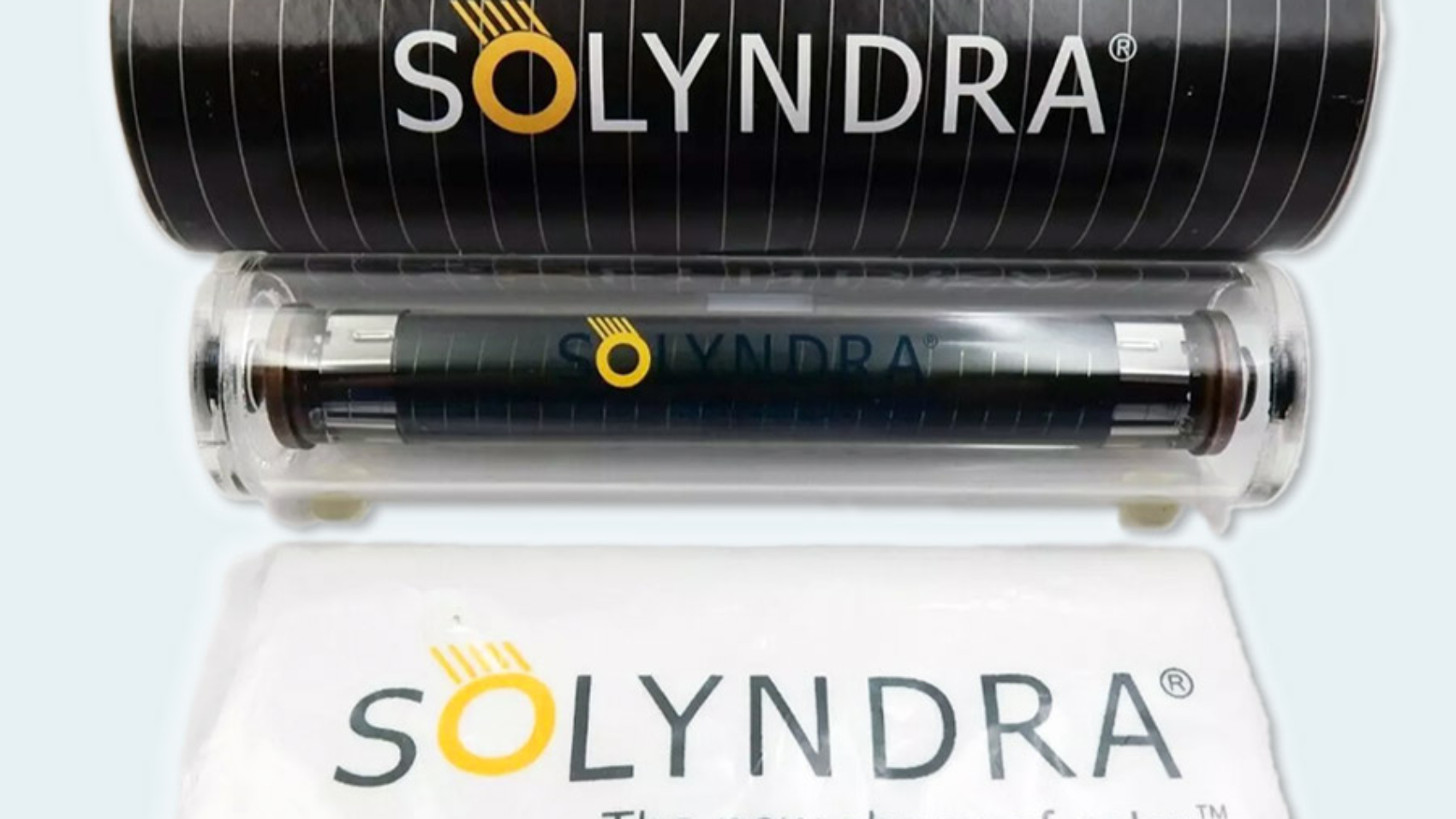
Solyndra, founded in 2005 by former employees of Applied Materials, offered a novel alternative: cylinders coated in sunlight-absorbing chemicals. The tubes were lighter than polysilicon-based panels and potentially easier to install.
The company became a darling of the burgeoning eco-startup scene, ultimately raising more than a billion dollars from investors.
In 2009, Solyndra was the first to receive a federal loan guarantee—to the tune of $535 million—under a 2005 Department of Energy program intended to promote renewable-energy projects.
In December 2009, Solyndra filed for an IPO. A few months later, the company updated its paperwork with the SEC to note that its auditor had raised doubts about its ability to continue operations. Solyndra pulled the offering in June 2010.
Solyndra’s struggles were in part based on unrealistic growth expectations and too little focus on sales and marketing.
Another factor was the unusual design of the company’s product. By 2009, polysilicon prices had dropped 80%, giving an advantage to conventional solar panels that used the material. It cost Solyndra $4 to produce its tubes for every watt of power output—and the company could sell them for only $3.24 per watt. Rival First Solar, which used a different material called cadmium telluride in its panels, had costs of 93 cents per watt in 2009.
Investors with knowledge of Solyndra’s operations told Chernova in 2011 that the DOE loan guarantee may have hurt more than it helped. The money went toward constructing a new factory, burdening the already struggling company with significant fixed costs. As Solyndra’s fortunes turned, the government’s provision that it be paid out first in the event of a failure made it harder to raise additional capital from private investors.
The company filed for chapter 11 bankruptcy in September 2011. Two days later, the FBI raided Solyndra’s offices as part of a probe into whether executives knowingly misled the government to secure the loan guarantee. A year later Solyndra still couldn’t find a buyer. It tried to sell off its assets to pay back creditors. The government failed to recover most of the $527 million Solyndra ultimately received from the loan guarantee.
Competition with state-subsidized Chinese solar panels also squeezed Solyndra and other manufacturers.